Where the Galvanic Series Meets the Real World: Five Fastener Mismatches That Escape the Drawing Review
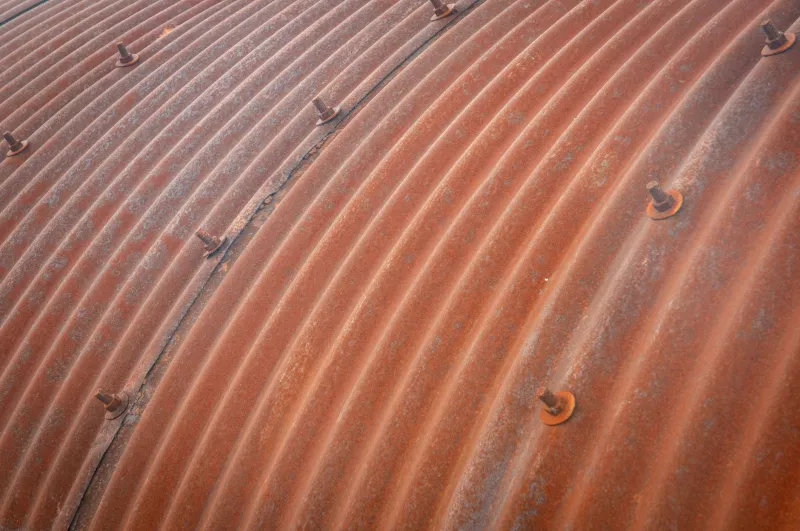
Walk a coastal highway structure, a water treatment plant, or a food-processing line that has been in service for a decade and you can often read the specification history in the corrosion staining. Bolts that shed their coating in the first winter. White aluminum oxide blooming around stainless washers. A galvanized bracket turning brittle where it clamped a copper busbar. None of these failures were designed in deliberately. They arrived through gaps between the drawing, the purchase order, and the receiving dock.
Galvanic corrosion is well understood in principle and consistently under-controlled in practice, because the risk is created by combinations rather than by individual parts. No single line item on a bill of materials looks wrong. The fastener meets its ASTM or SAE callout. The plate meets its specification. The problem lives in the interface.
Why These Couples Fail Quietly
The mechanism is straightforward: two dissimilar metals in electrical contact and bridged by an electrolyte form a galvanic cell. The anodic member corrodes faster than it would alone; the cathodic member is largely protected. The severity depends on the potential difference between them, the ratio of cathode area to anode area, and how long the electrolyte persists. A small anode paired with a large cathode — a stainless bolt in a broad aluminum panel, for instance — concentrates dissolution into a very small area and can perforate it quickly.
What makes this hard to manage is that detection usually comes late. Coating failures and metal loss progress out of sight beneath washers, under faying surfaces, and inside joints that are not disassembled until a scheduled outage. By then the finding is not a specification correction; it is a repair scope.
1. The Coated Fastener in the Uncoated Interface
A zinc- or zinc-nickel-plated bolt threaded into a steel structure is normally a sound choice. The trouble begins when the coating is damaged during installation and the assembly is wetted: the zinc becomes the anode and the exposed steel becomes the cathode, and the coating sacrifices itself as intended — until it is consumed at the damaged site. Where the coating is thin on thread crests or absent under the head, that localized loss drives hydrogen pickup in high-strength fasteners and accelerates rust creep.
Where it slips through: coating weight and thickness are rarely verified at receiving, and thread damage from powered installation is not captured anywhere. Countermeasure: specify coating class and thickness, verify on a sampling basis, and require thread lubrication and torque procedures that protect the coating rather than shear it.
2. Stainless Fasteners Into Aluminum
Stainless is often chosen to stop fastener corrosion, and it does — at the fastener's expense no longer, but at the aluminum's. In bridge rail, sign structures, curtain wall, and aluminum equipment frames, a 300-series stainless bolt or washer against bare aluminum is a textbook small-anode-to-large-cathode couple. Deicing salts and coastal humidity supply the electrolyte; pitting and exfoliation follow around the hole.
Where it slips through: the drawing may call out a stainless fastener and an aluminum member on separate sheets, with no isolation note at the interface. Countermeasure: specify isolating washers, coated fasteners, or a compatible alloy, and treat the joint as an assembly rather than two parts.
3. Galvanized Steel Meeting Copper, Brass, or Bronze
In water and process piping, galvanized supports, clamps, and hangers frequently come into contact with copper alloy valves, bushings, and instrumentation. Zinc sits far down the galvanic series relative to copper, and the resulting attack on the galvanizing is rapid where a conductive fluid provides the bridge. The downstream consequence is often not the hanger itself but the rust staining, reduced section, and eventual structural inadequacy of the support.
Where it slips through: mixed-material piping packages are assembled from multiple submittals, and the interface is nobody's specific line item. Countermeasure: review the installed assembly, not the component list, and require dielectric isolation or an alternate hanger material wherever the couple is unavoidable.
4. The Geometry That Keeps the Electrolyte Around
Even a modest potential difference becomes serious when the joint design traps moisture. Stacked washers, unsealed faying surfaces, lapped plates, and upward-facing crevices create the wet-dwell time that galvanic attack requires. The same two metals, arranged with drainage and sealed edges, may perform acceptably for decades.
Where it slips through: drawings communicate geometry but seldom communicate drainage intent. Countermeasure: make wet-dwell a design review item — seal faying surfaces, orient laps to drain, and eliminate blind crevices where a dissimilar couple exists.
5. The Replacement Part That Wasn't the Same Alloy
The most common field mismatch of all is a maintenance substitution. A contractor replaces grade 316 stainless with 304, or a zinc-plated bolt with an uncoated high-strength equivalent pulled from a bin, or an aluminum washer with a galvanized one. The assembly still functions mechanically, and the galvanic consequences are deferred by months or years.
Where it slips through: there is no controlled parts list at the point of repair, and the substitution is documented only on a work order. Countermeasure: include joint-level material requirements in maintenance documentation, and audit substitutions rather than assuming equivalency.
Making the Review Impossible to Skip
The practical fix is procedural rather than exotic. Add an interface column to the bill of materials that names the mating material for every fastener and bracket. Include coating class and isolating hardware as explicit line items rather than notes. Require receiving inspection to verify coating and alloy on high-risk couples. And when a substitution is proposed, require the galvanic pair to be re-evaluated along with the mechanical properties.
Galvanic risk does not announce itself at design review. It announces itself eight years later, in a maintenance budget. The manufacturers and fabricators who control it are the ones who treated the joint — not the part — as the unit of specification.