The Hidden Tax of SKU Sprawl: Rationalizing Material Grades Without Compromising Design

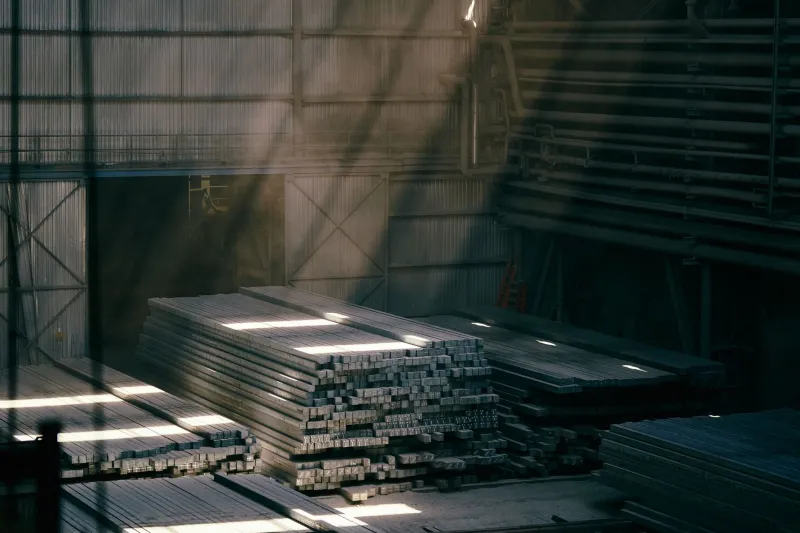
Photo by Photo by Bruno BD on Unsplash on Unsplash
Material variety is usually introduced with good intentions. A customer asks for a slightly different alloy temper. A fabricator prefers a familiar gauge. An engineer specifies a finish because it worked on a previous project. Over time, those reasonable decisions accumulate into a catalogue of near-duplicate grades, thicknesses, coatings, and colors. Each addition looks minor. Together, they create a hidden tax that shows up as slower lead times, higher minimum order quantities, excess inventory, more changeovers, and more opportunities for error.
The problem is not variety itself. Some applications genuinely require distinct material properties, corrosion resistance, or appearance. The problem is unmanaged variety: SKUs that exist because of habit, incomplete information, or a single low-volume request, rather than because they serve a meaningful design or operational need. For US manufacturers and distributors, rationalizing that tail end of the catalogue can improve service levels without narrowing design intent.
Where SKU Sprawl Comes From
Sprawl rarely originates in a deliberate product strategy. It emerges from local optimization. A sales team adds a finish to win a small account. A plant adds a grade to avoid retooling. A specification library carries forward legacy materials that are no longer preferred but have never been formally retired. Procurement tolerates the growth because each individual SKU appears inexpensive to hold.
The costs are distributed, which makes them easy to miss. Purchasing sees more suppliers and more purchase orders. Inventory sees more bins and more slow-moving stock. Production sees more setup changes and shorter runs. Quality sees more inspection plans and more opportunities for mix-ups. Customer service sees longer quoted lead times because a low-volume grade is not stocked and must be scheduled around higher-volume work.
The Symptoms of a Bloated Material Catalogue
A material catalogue is probably carrying low-value SKUs if several of the following are true:
- A large share of SKUs accounts for a small share of volume.
- Multiple grades are functionally interchangeable for the majority of applications.
- Finishes or colors differ only slightly and are rarely specified by end users.
- Lead times for common items are extended by changeovers for low-volume variants.
- Inventory includes grades with no movement in the past 12 months.
- Quality incidents cluster around visually similar grades or finishes.
- Sales teams maintain informal substitution rules because the catalogue is too complex to quote quickly.
None of these symptoms proves that a SKU should be eliminated. They do justify a structured review.
A Rationalization Framework
1. Start with usage and criticality
Rank SKUs by annual volume, revenue, and order frequency. Then overlay criticality: does the material appear in safety-critical, regulated, or customer-approved applications? A low-volume grade may still be essential if it supports a qualification that cannot be changed without lengthy revalidation. The goal is to separate low-volume, low-criticality items from low-volume, high-criticality items.
2. Test functional equivalence
For each candidate, compare mechanical properties, corrosion performance, temperature limits, dimensional tolerances, and processing behavior. Do not rely on a single datasheet value. A substitute that meets yield strength may differ in machinability, weldability, or coating adhesion. Where equivalence is plausible, confirm it with the engineering function and, where required, with the customer.
3. Calculate cost-to-serve
Fully loaded cost includes procurement, inbound freight, storage, handling, inspection, obsolescence, and production changeover. A grade that costs slightly less per pound may be far more expensive to serve at low volume. A finish that avoids a setup change may justify its premium even if the unit price is higher. The analysis should compare total cost, not purchase price alone.
4. Consolidate finishes and tolerances before grades
Finishes, colors, and tolerances are often easier to rationalize than base metallurgy. If customers rarely distinguish between two similar coatings, or if a tighter tolerance is specified by default rather than by function, those may be safer consolidation targets. Base grades should be reviewed more cautiously because they affect structural and corrosion performance.
5. Govern exceptions explicitly
Rationalization fails when it becomes a blanket prohibition. Create an exception path for genuine design requirements, customer qualifications, and legacy obligations. Require a named owner, a review date, and a minimum volume or strategic justification. This prevents retired SKUs from quietly returning through informal requests.
Preserving Design Intent
The strongest objection to SKU reduction is that it limits design freedom. In practice, a leaner catalogue can improve design support because engineers and sales teams can master the available options and provide faster, more reliable guidance. The key is to preserve performance where it matters. If a project needs a specific corrosion class, high-temperature capability, or appearance match, that requirement should be documented and protected.
A useful discipline is to distinguish between functional specifications and habitual specifications. Functional specifications describe what the material must do. Habitual specifications describe what has always been ordered. Rationalization should target the habitual layer while leaving the functional layer intact.
Implementation Without Disruption
Phase out low-value SKUs gradually. Start with items that have no open orders, no customer qualifications, and no recent design activity. Communicate changes to sales, customer service, and key accounts before the catalogue is updated. Update specification libraries, ERP records, and quoting tools at the same time so that outdated part numbers do not persist in parallel.
Track the results in operational terms: lead time for core products, inventory turns, changeover hours, quality holds, and quote turnaround. These metrics make the case for rationalization more convincingly than catalogue counts alone.
The Bottom Line
SKU sprawl is a tax on focus. It consumes working capital, slows production, and complicates quality control, often without delivering proportional customer value. A disciplined review of material grades and finishes can reduce that burden while protecting the exceptions that truly matter. The objective is not a smaller catalogue for its own sake. It is a catalogue that is easier to supply, easier to specify, and better aligned with the work the business actually performs.