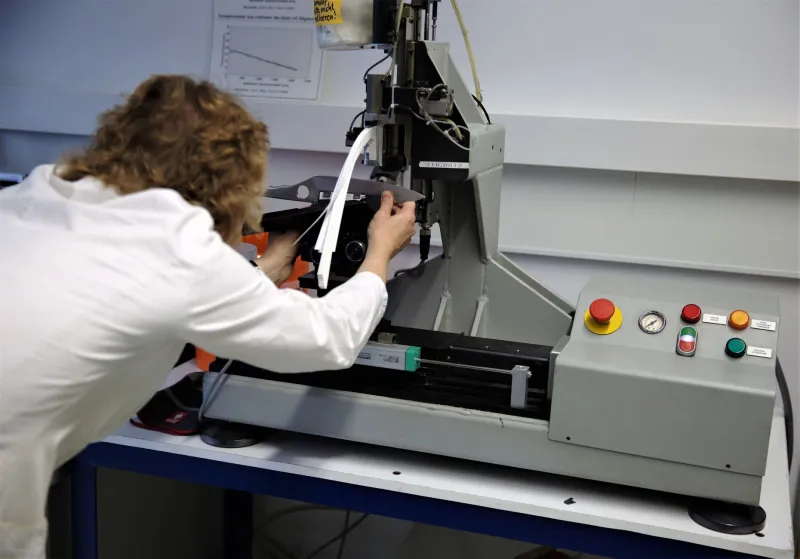
Five Performance Realities That Material Datasheets Won't Tell You

Every engineer who has spent time in the field knows the frustration: a material that looked excellent on paper underperforms in service. The tensile strength was within spec. The thermal rating appeared adequate. The chemical resistance profile seemed right for the environment. And yet, the component failed ahead of schedule, the coating degraded faster than projected, or the structural assembly exhibited behavior the design hadn't anticipated.
This gap between published specification and real-world performance is one of the most persistent challenges in materials selection for construction and industrial applications. Datasheets, by their nature, are produced under standardized test conditions designed for comparability—not for the specific, often extreme, conditions of a given end use. Understanding what those documents omit is as important as understanding what they contain.
Here are five performance factors that standard material specifications routinely fail to capture.
1. Environmental Degradation Under Combined Exposure Conditions
Most published chemical and environmental resistance data reflects single-variable testing: a material's response to a specific chemical, a specific temperature, or a specific UV exposure level. What datasheets rarely address is how a material performs when multiple environmental stressors act simultaneously—which is almost always the case in real service.
Consider a polymer coating applied to structural steel in a coastal industrial facility. The datasheet may confirm excellent resistance to salt spray (per ASTM B117) and adequate UV stability (per ASTM G154). What it likely will not tell you is how those properties interact when the material is simultaneously exposed to elevated humidity, thermal cycling between day and night temperatures, and trace concentrations of industrial solvents in the atmosphere.
Combined environmental exposure frequently accelerates degradation mechanisms that single-factor testing does not predict. Oxidation rates increase under UV exposure. Moisture absorption—which affects mechanical properties—can be significantly higher in humid environments than in laboratory air. For engineers specifying materials in marine, chemical processing, or outdoor infrastructure applications, requesting multi-factor exposure test data from suppliers—or conducting application-specific testing before full deployment—is a necessary step that datasheets alone cannot replace.
2. Fatigue Behavior Under Application-Specific Load Cycles
Static mechanical properties—yield strength, ultimate tensile strength, hardness—are the figures most prominently featured in material specifications. These values are measured under monotonic loading conditions and are genuinely useful for structural calculations. What they do not capture is fatigue performance under the specific cyclic load patterns of a given application.
Fatigue failure is the dominant failure mode for many engineered components operating under dynamic loads—rotating machinery, bridge structures, pressure vessels, and fastener assemblies among them. A material's fatigue limit (or endurance limit for ferrous materials) represents the stress amplitude below which indefinite life is theoretically achievable, but that figure is derived from standardized rotating-beam tests that may not reflect the load ratio, frequency, or mean stress conditions of the actual application.
Further complicating matters: fatigue performance is highly sensitive to surface condition, residual stress state, and the presence of stress concentrations introduced during fabrication or installation. A drilled hole, a weld toe, or a surface scratch can reduce effective fatigue life by an order of magnitude relative to the smooth-specimen data on a datasheet. Engineers designing for fatigue-critical applications should request S-N curve data across relevant load ratios and treat datasheet endurance limits as upper-bound estimates requiring application-specific adjustment.
3. The Effect of Installation Variables on In-Service Performance
Material properties as published assume ideal installation. Reality is considerably more variable. Adhesives, sealants, coatings, and composite materials in particular are highly sensitive to surface preparation quality, application temperature, mixing ratios, cure conditions, and the skill level of the installation crew.
Epoxy adhesives, for example, may achieve bond strengths close to published values when applied by trained personnel under controlled conditions—correct surface profile, specified mixing ratio, temperature within the recommended application window, and adequate cure time before loading. In the field, deviations from any of these parameters are common. Substrate contamination reduces bond strength. Low ambient temperatures extend cure time and may prevent full crosslink development. Improper mixing ratios can leave unreacted components that plasticize the cured adhesive and reduce long-term durability.
The datasheet will not tell you that the published bond strength assumes a 3-mil surface profile and a 75°F application temperature. That information may exist in a technical data sheet addendum or installation guide—but it requires engineers to look beyond the primary specification document and engage directly with technical support resources.
4. Long-Term Creep and Stress Relaxation
For applications involving sustained load over extended time periods, creep behavior—the tendency of a material to deform progressively under constant stress—is a critical design parameter that standard mechanical property tables address incompletely, if at all.
This is particularly relevant for thermoplastics, elastomers, and certain aluminum alloys used in structural or load-bearing applications. A bolt loaded to a specified preload in a flanged connection will experience stress relaxation over time as the material creeps, reducing clamping force and potentially compromising joint integrity. A polymer structural component supporting a sustained load may exhibit dimensional changes that affect fit, function, or load distribution within an assembly.
Creep data, when published, is often presented for a single temperature and stress level. In practice, the interaction of temperature and stress on creep rate is nonlinear, and published curves may not span the full range of conditions encountered in service. For long-life structural applications, engineers should request time-temperature creep data specific to the anticipated service conditions and apply appropriate safety factors to account for data extrapolation.
5. Variability Across Production Lots and Supplier Sources
Perhaps the most underappreciated gap between datasheet and reality is the implicit assumption that the published properties represent a consistent, repeatable material. In practice, production variability—both within a single supplier's output and across different approved sources—can produce meaningful differences in performance-critical properties.
This is not a hypothetical concern. Studies of structural polymer composites have documented inter-lot variation in fiber volume fraction, void content, and resin cure state sufficient to produce measurable differences in interlaminar shear strength and fatigue performance. Metallic materials sourced to the same ASTM specification from different mills may exhibit different microstructures, residual stress states, and trace element compositions that influence corrosion resistance and fracture toughness.
The datasheet presents a single set of typical or minimum values. It does not convey the statistical distribution of properties across production lots or the potential range of performance from different approved sources. Engineers specifying materials for high-reliability applications should request lot-specific test reports, establish acceptable property ranges beyond the minimum specification requirements, and consider incoming inspection protocols for critical supply streams.
Reading the Datasheet Correctly
None of this is an argument against using material specifications—they remain an essential tool for materials selection and design. The point is that a datasheet is the beginning of an engineering conversation, not its conclusion. The properties it presents are necessary but not sufficient for confident material selection in demanding applications.
At Chiruny Material, we support engineers who need more than a table of typical values. Understanding how materials perform in your specific environment, under your specific loads, through your specific installation process, is the foundation of reliable design. The specifications are the starting point. The engineering judgment applied to them is what determines whether a material performs or fails.